
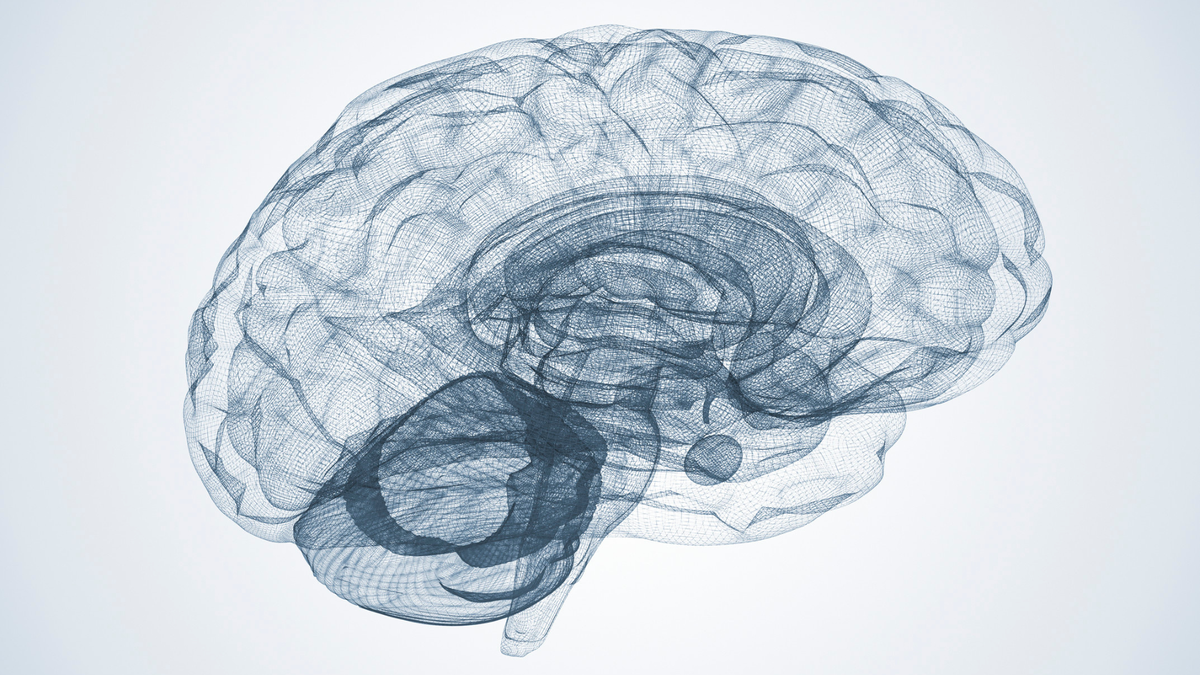
Forgetfulness, brain fog, and difficulty concentrating are often treated as unavoidable downsides of pregnancy and new motherhood. But emerging neuroscience suggests that the maternal brain isn't losing its edge—it's undergoing a remarkable transformation.
If you've ever walked into a room and forgotten why you were there, lost your train of thought mid-sentence, or struggled to remember something that used to come easily, you've probably experienced what we commonly call "mom brain."
For years, these experiences have largely been attributed to sleep deprivation, stress, and the demands of caring for a baby. While those factors certainly play a role, new research is revealing something much more interesting: pregnancy actually changes the structure and function of a woman's brain, potentially helping prepare her for motherhood.
Two recent articles from National Geographic and Smithsonian Magazine explore some of the latest discoveries about the maternal brain, and what they mean for women during pregnancy and long after childbirth.
Pregnancy Rewires the Brain
One of the most significant findings in recent neuroscience is that pregnancy triggers widespread changes in the brain's structure, particularly in gray matter, which plays an important role in information processing, memory, and emotional regulation.
A landmark 2017 study found that pregnancy was associated with changes in gray matter volume in specific brain regions, particularly those involved in social cognition and understanding other people's thoughts and emotions. These changes weren't random or necessarily a sign of lost brain function. Instead, researchers believe they may reflect a process called neural pruning, in which the brain refines its connections to become more specialized and efficient.
Think of it as the brain reorganizing itself to meet the demands of a new stage of life. For a mother, that may mean becoming more attuned to subtle emotional cues, recognizing her baby's needs, and responding to the people around her.
And these changes can be long-lasting. Research suggests that some structural differences in the maternal brain persist for years after pregnancy, rather than simply returning to a pre-pregnancy state.
Your Brain May Become More Attuned to Your Baby
One of the most fascinating areas of research involves the brain's ability to recognize and respond to other people's emotions.
During pregnancy, changes occur in networks associated with social awareness, empathy, and interpreting emotional cues. These adaptations may help expectant and new mothers become especially sensitive to their babies' needs, even before their babies have the words to communicate them.
Research highlighted by Smithsonian Magazine has also linked greater brain remodeling during pregnancy with stronger reported attachment between mothers and their infants.
This doesn't mean that every mother will experience an immediate or effortless bond with her baby. Maternal experiences are incredibly individual, and bonding can take time. But these findings offer a new perspective on the biological changes that may support the transition into motherhood.
Every Pregnancy May Change Your Brain Differently
If you've had more than one child, you may have noticed that each pregnancy and postpartum experience felt different. It turns out your brain may be changing differently, too.
A 2026 study discussed in both articles found that while a first pregnancy is associated with changes in networks involved in self-reflection and social understanding, a second pregnancy may produce more pronounced changes in networks responsible for attention, sensory processing, and movement.
These are skills that become particularly useful when you're caring for more than one child. Think about being able to distinguish a toddler's frustrated yell from a baby's cry, keep track of multiple things happening at once, or instinctively adjust your body while holding one child and helping another. (Could this explain why the moms with the most kids are always the chillest?)
Researchers are still investigating how these changes translate into everyday behavior, and what happens to the brain after subsequent pregnancies. But the findings suggest that the maternal brain continues to adapt to the evolving demands of motherhood.
So, What About the Brain Fog?
Here's where things get especially interesting. While research suggests that pregnancy can improve certain aspects of social awareness and emotional processing, many women experience temporary difficulties with memory, concentration, and mental clarity.
Some studies have found that memory performance can dip during pregnancy, particularly in the third trimester, and that some women experience lingering cognitive challenges postpartum. Other research has identified improvements in certain types of memory and social cognition.
Scientists haven't yet established exactly how the structural changes observed in brain scans relate to the everyday experiences of forgetfulness and brain fog. Sleep deprivation, hormonal fluctuations, stress, and the enormous mental load of caring for a baby can all contribute.
In other words, the science doesn't suggest that every forgotten appointment or misplaced set of keys is evidence of your brain becoming more efficient. Rather, it highlights that the maternal brain is navigating a complex period of biological and cognitive change.
And it's worth remembering that persistent or severe difficulties with concentration, memory, mood, or daily functioning deserve attention and support from a healthcare professional.
The Maternal Brain May Be Built for the Long Haul
Perhaps one of the most encouraging areas of research is the possibility that pregnancy-related brain changes may have benefits that extend well beyond the newborn years.
Some studies suggest that the cognitive demands of motherhood, including sustained attention, multitasking, emotional regulation, and responding to others' needs, may contribute to cognitive resilience over time. Researchers are also exploring whether the neurological adaptations associated with pregnancy may be linked to a lower risk of certain mental health challenges.
One study highlighted by National Geographic found an association between less pronounced brain remodeling during pregnancy and more reported depressive symptoms. This is an early finding, however, and does not establish that brain remodeling prevents postpartum depression or that a particular pattern of brain change predicts an individual's mental health.
Scientists are continuing to investigate how these changes may relate to maternal well-being, including whether brain imaging could eventually help identify women who may benefit from earlier mental health support.
Motherhood is a Major Brain Transition
For generations, women have described feeling different after becoming mothers. The brain fog, the heightened awareness of their children's needs, the emotional intensity, and even the sense that their priorities have fundamentally shifted have often been dismissed as simply part of motherhood.
Neuroscience is beginning to give us a more complete picture. Pregnancy is a period of significant brain plasticity, comparable in some ways to other major developmental transitions. The brain adapts to new hormonal environments and the demands of caregiving, and some of those adaptations may remain for years.
But there's still much researchers don't know. Many studies have involved relatively small or demographically limited groups of women, and scientists are working to understand how factors such as age, environment, culture, and individual experiences influence the maternal brain.
What we do know is that the transition to motherhood is much more than a physical one. It is a profound biological, emotional, and neurological experience, and every mother's journey through it is different.
Why Community Matters During This Transition
At FIT4MOM, we talk a lot about how important it is for moms to take care of themselves, not just their babies. And this emerging research offers another reason to recognize just how much women are navigating during pregnancy and postpartum.
Movement, time outdoors, meaningful social connection, and opportunities to focus on yourself can all be valuable parts of maternal well-being. And sometimes, the most important thing you can do is simply spend time with other moms who understand what you're going through.
You don't have to remember everything, do everything, or have motherhood figured out. Your brain and body are adapting to an enormous life transition, and you deserve support along the way. Whether you're expecting your first baby, chasing a toddler while caring for a newborn, or navigating motherhood years down the road, your experience matters. And you don't have to go through it alone.
The takeaway? Science has finally caught up to what we’ve always known - Mombrain is real. And that research has helped us understand that we’ve traded the ability to instantly recall the name of that actor in that show we loved in college for the ability to discern what kind of day our kid had just by the sound of the backpack hitting the floor. We’ll take the trade.
And while scientists are still uncovering exactly what that means, one thing is clear: the maternal brain deserves a lot more attention, understanding, and appreciation.
FURTHER READING