
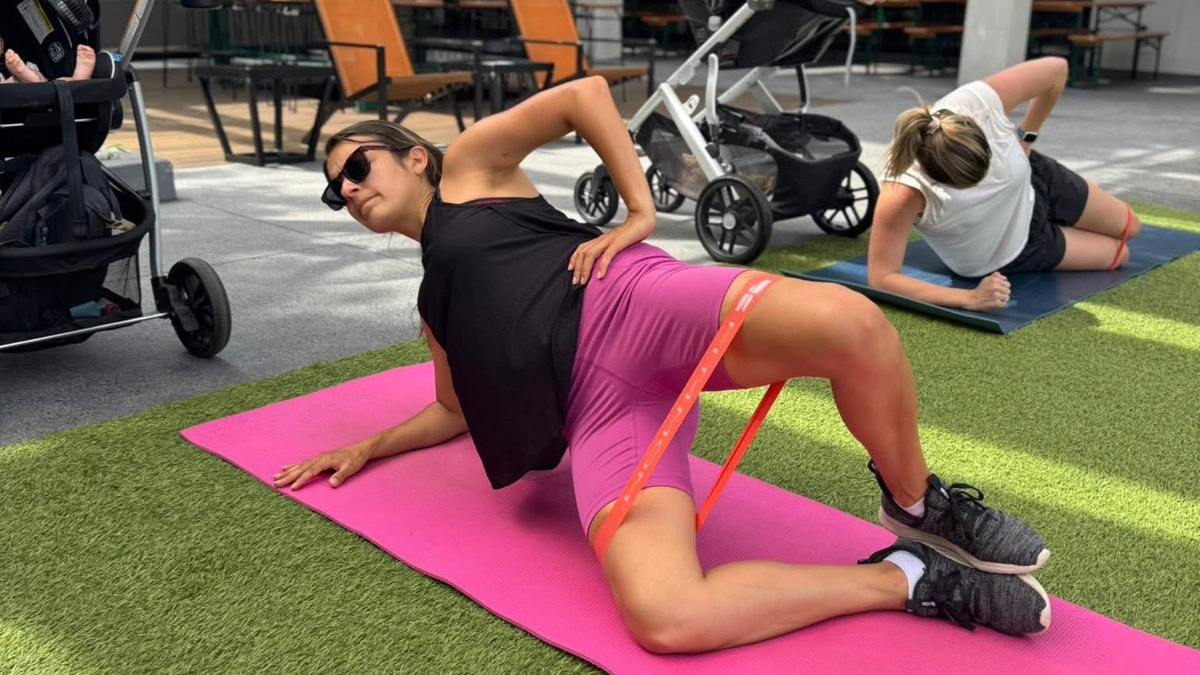
If you've recently had a baby, or expecting soon, you've probably read or thought about how to "strengthen your core” after baby.
But what does that actually mean?
And more importantly, how do you heal your core after pregnancy without making things worse?
The truth is, your postpartum body isn't simply "out of shape." It's recovering from one of the most remarkable physical transformations the human body can experience.
Understanding what happens during pregnancy—and why healing takes time—can help you recover more confidently and safely.
Your Core Is More Than Just Your Abs
When most people think of their core, they picture a six-pack.
In reality, your core is an entire system that works together to support your body. It includes:
- Your diaphragm (the muscle that helps you breathe)
- Your deep abdominal muscles, especially the transverse abdominis
- Your pelvic floor muscles
- Your back muscles
- Your glutes
Together, these muscles create a natural "canister" that stabilizes your spine, supports your organs, manages pressure inside your abdomen, and allows you to move efficiently.
Pregnancy changes every part of this system.
What Happens to Your Body During Pregnancy?
Over the course of nine months, your body performs an incredible balancing act.
Your abdominal muscles stretch.
As your uterus grows, your abdominal wall expands to make room for your baby. The connective tissue between your rectus abdominis muscles (called the linea alba) naturally stretches and thins.
For many women, this results in diastasis recti, or a separation of the abdominal muscles. Contrary to popular belief, this is a normal adaptation during pregnancy—not an injury or something you "caused."
Your pelvic floor works overtime.
Your pelvic floor supports your growing uterus throughout pregnancy while hormones like relaxin soften ligaments and connective tissues to prepare your body for birth.
Whether you have a vaginal delivery or a Cesarean birth, these muscles have experienced months of increased pressure and often need time—and sometimes targeted exercise—to recover.
Your breathing mechanics change.
As your baby grows upward, your diaphragm has less room to move. Your rib cage expands, your posture shifts, and the way your body manages pressure changes dramatically.
These changes are completely normal, but they can affect how your core functions after delivery.
Welcome to the Fourth Trimester
Many moms expect to "bounce back" after birth.
In reality, your body is just beginning another phase of recovery.
The fourth trimester refers to the first 12 weeks after delivery, when your body is healing from pregnancy and birth while adjusting hormonally, physically, and emotionally to life with a newborn.
During this time, your uterus shrinks back toward its pre-pregnancy size, hormone levels fluctuate dramatically, tissues continue healing, and your abdominal wall gradually regains tension. Sleep deprivation, feeding your baby, and carrying an infant all place new demands on a body that's still recovering.
Healing doesn't happen overnight—and it shouldn't have to.
Why Crunches Aren't the Answer
One of the biggest misconceptions about postpartum fitness is that stronger abs come from doing more crunches.
Early postpartum, traditional sit-ups, crunches, and high-impact exercises can sometimes increase pressure on healing tissues before they're ready.
Instead, the goal is to restore how your core works, not simply make your abdominal muscles tired.
That starts with rebuilding coordination between your breathing, deep core muscles, and pelvic floor.
Five Ways to Support Core Healing
1. Start with Your Breath
It may sound simple, but learning to breathe well is one of the most effective ways to reconnect with your core.
Deep diaphragmatic breathing helps coordinate the diaphragm, abdominal muscles, and pelvic floor, creating a strong foundation for future exercise.
2. Rebuild from the Inside Out
Your deepest abdominal muscle—the transverse abdominis—acts like a natural corset.
Gentle activation exercises help restore stability before progressing to more challenging movements.
3. Strengthen Your Pelvic Floor
Pelvic floor muscles don't always need endless Kegels.
Some muscles are weak, while others are overly tight. Working with a pelvic floor physical therapist can help determine what your body actually needs.
4. Progress Gradually
Walking, functional strength training, and controlled movements often provide more benefit than jumping immediately into intense workouts.
Recovery is not about doing less forever—it's about doing the right things at the right time.
5. Give Yourself Grace
Healing isn't linear.
Some days your body feels strong. Other days it feels heavy and tired.
That's normal.
Your body grew, carried, and delivered a baby. Recovery deserves the same patience you gave pregnancy.
Signs You May Benefit from Professional Support
Consider speaking with your healthcare provider or a pelvic floor physical therapist if you experience:
- Persistent abdominal doming or bulging
- A feeling of heaviness or pressure in your pelvis
- Urinary leakage
- Pain during exercise
- Low back or hip pain that doesn't improve
- Concerns about diastasis recti
These issues are common, but they aren't something you simply have to live with.
You're Not Starting Over—You're Rebuilding
One of the most important mindset shifts we encourage at FIT4MOM is this:
You aren't trying to get your "old body" back.
You're building a strong body for the season of motherhood you're in now.
That body may look different than it did before pregnancy—and that's okay.
Strength after motherhood isn't about shrinking yourself. It's about rebuilding confidence, restoring function, and creating a foundation that supports lifting toddlers, pushing strollers, carrying diaper bags, and living an active life with your family.
Heal Alongside a Community That Understands
At FIT4MOM North Atlanta, every workout is designed with motherhood in mind. Our instructors are trained in prenatal and postpartum fitness and offer modifications for every stage of recovery, whether you're six weeks postpartum or six years into motherhood.
Because healing isn't just physical.
It's easier to rebuild your strength when you're surrounded by women who understand exactly what your body has been through.
We'd love to help you take that first step. Book your first class today!